

How to Properly Wax Bowstring: Step-by-Step
Table of Contents
- Why Bowstring Waxing Matters for Performance
- What You'll Need Before Waxing
- How to Inspect Your Bowstring for Dryness and Wear
- Cleaning the Bowstring Before Waxing
- Step-by-Step: How to Apply Bowstring Wax
- How Often to Wax a Bowstring
- Can You Over-Wax a Bowstring
- Troubleshooting and When to Replace Your String
- Frequently Asked Questions
Last Updated: October 7, 2026
Why Bowstring Waxing Matters for Performance
A wax bowstring is one of your bow's most critical components, and without maintenance it deteriorates quickly. When you wax bowstring regularly, you protect it from drying out, fraying, and breaking prematurely, extending its lifespan and maintaining consistent arrow flight.
Bowstring wax acts as a protective barrier, sealing moisture into the fibers so they don't become brittle. Dry strings lose elasticity and develop fuzzy patches that catch on your serving or peep sight. A well-maintained string delivers better arrow grouping shot after shot.
The serving, the wrapped section where the arrow nocks, takes the most abuse. Without wax, it separates from the core strands, peep rotation becomes more likely, and accuracy suffers. Kansas Archery Center LLC recommends treating bowstring maintenance as regular pre-season prep, not an emergency fix.
What You'll Need Before Waxing
Gather your supplies first: bowstring wax, a clean cloth, and your bow. A leather pad is optional for even application. The wax itself matters most, poor wax leaves residue or fails to protect adequately.
Choosing the Best Wax for Bowstrings
Bowstring wax is specifically formulated for archery strings. It penetrates fibers without sticky buildup, and most quality wax contains beeswax or synthetic polymers that bond with string material while staying pliable.
Look for wax that's tacky but not gummy and works into the strands smoothly when warmed. Avoid general-purpose waxes like furniture polish or candle wax, they don't adhere properly and attract dirt. The best wax stays in place through hundreds of shots without hardening or cracking; premium archery-specific wax outperforms budget alternatives, especially on compound bows where string stress is higher.
Bow Type and String Material Differences
Different bow types and string materials require slightly different approaches to waxing. Compound bows have more complex strings with multiple strands and serving sections; recurve and traditional strings are simpler but still benefit from regular waxing.
String material affects how wax bonds. Modern bowstrings use fibers like BCY 452X that accept wax readily, the wax fills microscopic gaps between strands and protects against UV damage and moisture loss.
If your bowstring uses a proprietary blend, like the MATCH bowstrings from Kansas Archery Center LLC that feature BCY ultra-low wax 452X fiber, follow the manufacturer's guidance. Pre-conditioned strings have already been treated at the factory, but they still need regular maintenance waxing after you begin shooting.

How to Inspect Your Bowstring for Dryness and Wear
Before you wax, inspect your string carefully. A dry string looks dull, may show fuzzy patches where fibers separate, and feels rough or catches when you run a finger along it.
Check the exposed strands between serving sections, these are most vulnerable. If core strands look frayed or discolored, waxing helps, but severe damage may mean replacement.
Examine the serving at the nocking point and where the string meets the limbs. Small separation is normal; significant gaps mean the string needs attention soon.
Cleaning the Bowstring Before Waxing
Clean your bowstring before applying fresh wax. Dirt and old residue interfere with new wax bonding properly. Use a dry cloth, microfiber works best, and wipe the entire string gently. Pay special attention to the serving sections where dirt accumulates.
For stubborn grime, use Anti-Venom Bowstring Cleaner from Kansas Archery Center LLC, which is formulated to remove buildup without damaging string fibers. Apply cleaner sparingly and wipe thoroughly. Let the string dry completely before waxing.
Never use water or harsh chemicals on your bowstring. Water can soak into the fibers and cause the string to swell, affecting draw weight and accuracy. Once clean and dry, your string is ready for wax application.
Step-by-Step: How to Apply Bowstring Wax
A clean, repeatable sequence beats improvised rubbing.
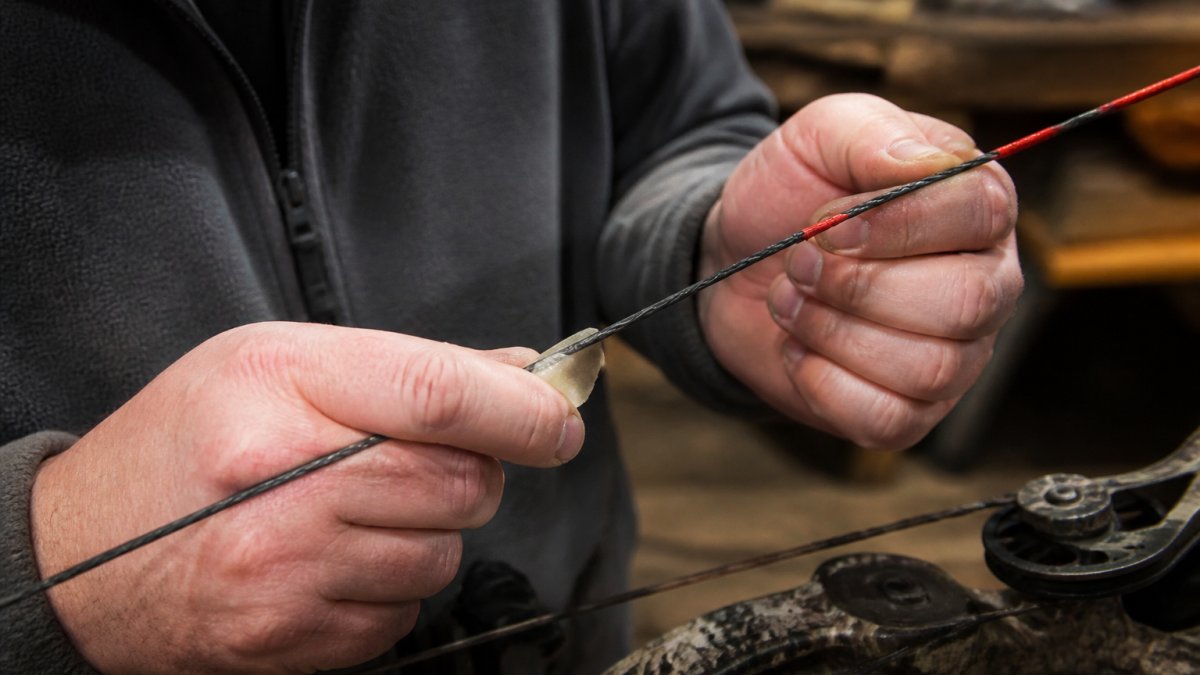
1. Secure the bow safely. Unstring it if you can, a slack string is easier to work and reach.
2. Confirm the string is clean and dry. Wipe the exposed strands with a dry microfiber cloth.
3. Warm a pea-sized piece of wax. Hold it between your fingers for 10-15 seconds, or roll it between your palms. Cold wax sits on the surface; warm wax sinks in.
**4.
5. Repeat for every exposed section between servings. Don't skip the short runs near the limb tips or above and below the peep.
Anti-Venom Bowstring Cleaner →
6. Buff off the excess with a cloth or leather pad. A few brisk strokes with a dry cloth or leather scrap pulls away surface wax and leaves a thin, even coat.
7. Inspect and re-check the serving. Confirm no wax has crept onto the center serving, the end servings, or the peep.
Warming Wax Before Application
Temperature matters. Cold wax sits on top of the strands; warm wax flows into the gaps and bonds better. Your hands provide enough heat, no heat gun, hair dryer, or lighter needed. Hold the wax between your fingers for 10-15 seconds, or rub it briskly between your palms. In a cold garage or truck bed in winter, warm it in your pocket first. Never use an open flame or high heat: it can soften or damage string fibers and the wax itself.
Working Wax Into the Strands With Friction
Friction makes waxing work: the rubbing generates heat that lets wax slip between strands and coat individual fibers. Light pressure won't do it, grip the string between your thumb and two fingers and rub back and forth along each exposed section with firm strokes. Wax coating your fingers is normal; reapply a little as you go. Keep going until the string feels slightly tacky and no surface layer of wax remains.
Where Not to Apply Wax
This is the boundary that separates a well-maintained string from a gummed-up one.
- Center serving. The wrapped section where the arrow nocks is already sealed and needs to grip the nock firmly. Wax here can cause inconsistent release and nock fit problems.
- End servings and the loops. The servings at the limb tips and the string loops are also sealed. Extra wax can work into the loop and affect how it seats on the limb tip.
- Cams, wheels, and the cable guard on compound bows. Wax buildup on cams and cables can attract grit and interfere with smooth rotation. Keep wax on the string, not the hardware.
- The peep sight and its serving. Wax around the peep can cause it to rotate or stick. Wax the strands around it carefully and wipe any wax off the peep itself.
- The string's contact points with the limb tips. These interfaces depend on a specific fit. Keep them clean.
Focus on the exposed strands between servings, that's where dryness, fuzz, and UV damage show up first.
How Often to Wax a Bowstring
There's no single correct interval, but a reliable starting point is every 100 to 300 shots. That range is a baseline, not a rule, the right frequency depends on your bow type, string material, weather, and the maker's recommendation. Treat the number as a checkpoint and let the string tell you when it needs attention.
A Realistic Schedule by Use and Conditions
- Heavy use (several sessions a week). Wax every 2-3 weeks, or roughly every 100-150 shots. Competition and 3D shooters often fall here.
- Moderate use (once or twice a week). Wax monthly, or every 200-300 shots.
- Light use (a few times a season, hunting-only). Wax before the season, after extended storage, and any time the string looks dull. A pre-season waxing plus a mid-season touch-up covers most hunters.
- Dry, dusty, or high-UV conditions. Shorten the interval, dry air pulls moisture from the fibers and UV breaks down string material. Wax and inspect more often.
- Wet or humid conditions. Dry the string thoroughly after a wet hunt or shoot before waxing, so you're not sealing moisture in.
- Cold-weather shooting. Cold makes wax stiff; warm it in your hands first and expect to use more friction.
Read the String, Not Just the Calendar
A shot count is a reminder; the string's condition is the real signal. Check it after every few sessions:
- Dull, faded appearance, the protective coat is wearing thin. Time to wax.
- Fuzzy patches or separated fibers, dryness is setting in. Wax now.
- Rough or catching feel, wax is depleted.
- Slight tackiness after waxing, you're in good shape. Gummy or sticky means you used too much.
Follow the String Maker's Guidance First
String material matters. High-performance fibers such as BCY 452X accept wax readily, but pre-conditioned and proprietary strings sometimes ship with specific maintenance instructions. When the maker's guidance and a general interval conflict, follow the maker. If you're unsure what material your string uses, check the packaging, string tag, or maker's website before you wax.
Can You Over-Wax a Bowstring
Yes, over-waxing is possible, though less common than under-waxing. Too much wax leaves a sticky residue that attracts dirt, makes the string tacky instead of smooth, and can affect arrow flight.
To remove excess, wipe the string firmly with a dry cloth several times, the friction pulls off the buildup without damaging the string underneath. The string should then feel slightly tacky but not gummy.
The key is restraint: use small amounts and build up gradually, since adding wax is easier than removing it. Most quality bowstrings, including those from Kansas Archery Center LLC, come already optimized for performance, you're maintaining that condition, not transforming the string.
Troubleshooting and When to Replace Your String
A well-maintained bowstring lasts 2-3 years of regular shooting; neglected strings fail within months. Consistent waxing gets you maximum lifespan from your investment.
Replace your string if you see strand breakage, individual fibers snapping inside the core. A few broken strands may not affect performance immediately, but they weaken the structure and continued shooting risks catastrophic failure.
Serving separation covering more than half an inch across multiple sections also means replacement. The serving holds the arrow nock in place, and severe separation compromises that function; peep rotation often signals serving problems.
When you're ready for replacement, consider custom bowstrings like MATCH bowstrings from Kansas Archery Center LLC, which are custom-made in-house and pre-conditioned to eliminate stretch, serving separation, and peep rotation.
Proper bowstring maintenance doesn't take much time, but it makes a real difference in your bow's performance. Waxing every few weeks keeps your string protected, extends its lifespan, and maintains consistent arrow flight.
Frequently Asked Questions
How often should you wax a bowstring?
Wax your bowstring every 100-300 shots, depending on use and environmental conditions. Hunters in dry climates may need to wax more frequently than target archers in humid conditions. Regular inspection is the best guide: if the string looks dull, fuzzy, or feels rough, it's time to wax. Proper maintenance extends string lifespan and keeps performance consistent.
Can you over-wax a bowstring?
Yes, over-waxing can reduce string performance. Excess wax attracts dirt, adds unnecessary weight, and can cause the string to feel sticky rather than slightly tacky. Apply wax in thin layers and remove excess with a dry cloth after each application. The goal is a light, protective coating, not a thick buildup. If you've over-waxed, clean the string and start fresh.
What's the best wax for bowstrings?
Use wax specifically formulated for bowstrings, such as BCY ultra-low wax products designed for archery fibers. These waxes protect string material without adding excessive weight or stickiness. Avoid candle wax or other substitutes, as they don't provide the same protection and can degrade string performance. Check your bowstring manufacturer's recommendations for compatibility with your specific string material.
Should you wax the serving on a bowstring?
No. Apply wax only to the exposed string strands, never to the serving (the wrapped section where the arrow nocks). The serving is designed to be dry for consistent arrow nocking and flight. Waxing the serving reduces grip and can cause peep rotation or nocking inconsistencies. Focus waxing on the main string body and avoid the center serving entirely.